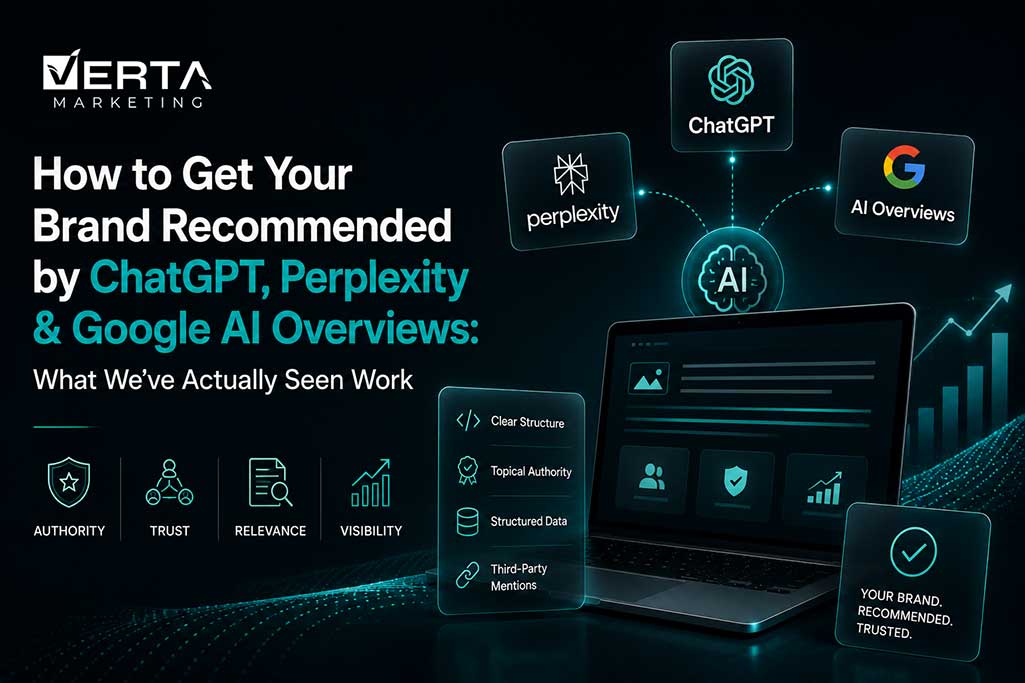





A buyer asks ChatGPT for the best vendors in your category. Another reads a Google AI Overview and never clicks a link. A third still scrolls the ten blue links. All three are searching, and each one finds answers through a different system.
Four terms now describe how to show up in those systems: SEO, AEO, GEO and LLM optimization. They overlap heavily, and the sales pitches around them are louder than the differences. This guide defines each one, compares them, and says which deserves your attention first.
What is SEO
SEO, or search engine optimization, is the work of earning rankings and clicks in Google and Bing results. It covers technical health, useful content, clear site structure, and the links that show other sites trust you.
Everything else on this list builds on it. To link a page in an AI Overview, Google must index it and be able to show a snippet. Google says the best practices for SEO remain relevant for its AI features.
You measure SEO with rankings, clicks, impressions and conversions.
What is AEO (answer engine optimization)
Answer engine optimization structures content so a search tool can lift a direct answer from it. Those answers show up as featured snippets, People Also Ask boxes, voice responses and AI Overviews.
In practice, AEO is editorial work. Each page opens with a plain answer to a real question, then adds detail. Headings mirror how buyers phrase the query. Definitions, steps and comparisons sit in short passages that make sense when quoted alone.
Measure presence and accuracy together. An answer that repeats an outdated service description does more harm than no answer.
What is GEO (generative engine optimization)
Generative engine optimization targets tools that write a reply instead of ranking a list: ChatGPT, Perplexity, Gemini and Claude. They gather material, then compose an answer, sometimes with citations.
The goal is to be one of the sources, or one of the brands, named in that reply. In our work, three things matter most. The content answers the question cleanly. The brand reads the same on every site that describes it. And trusted third-party sites, such as industry publications and review platforms, mention it.
You measure GEO by mentions and citations across the assistants your buyers use.
What is LLM optimization
LLM optimization is the narrowest term. It covers how a large language model retrieves, understands and repeats facts about your company. Some of that comes from training data. Some come from pages the model fetches live when someone asks.
That split shapes the work. You cannot edit a trained model, so you influence what it finds. That means consistent company facts, clear entity information, and pages built for retrieval. Use plain HTML, descriptive headings and one topic per page.
Many practitioners use GEO and LLM optimization interchangeably. We keep both terms because they point at different parts of one system. GEO looks at the results users see. LLM optimization looks at what the model pulls in to produce them.
You measure it by how often an assistant cites you and how accurately it describes you.
AEO vs GEO vs SEO, side by side
The four terms differ in what they target and where results appear. They share most of the underlying work.
The comparison table
| Discipline | Targets | Where results show | How you measure |
|---|---|---|---|
| SEO | Rankings and clicks | Google and Bing results | Rankings, clicks, impressions |
| AEO | Direct answers | Snippets, AI Overviews | Presence and accuracy in answers |
| GEO | Generative results | ChatGPT, Perplexity, Gemini | Mentions and citations |
| LLM optimization | Model retrieval | Assistants that cite you | How often and how accurately cited |
Read the table by column and the overlap appears. One page can score in every row. It ranks, it answers a question up front, and its brand reads consistently.
Do you need all three?
You need the outcomes of all three, but not three separate projects. Crawlable pages, accurate facts, answer-first writing and credible third-party mentions serve every row of the table. That is why we treat them as one strategy.
Picture a Toronto payroll software vendor. Rewriting its pricing page to open with a direct answer can help the page rank and win a snippet. It also gives an assistant the right plan details to quote. One edit serves three disciplines.
The effort does differ by discipline. SEO leans technical and link-based. AEO is editorial. GEO and LLM optimization lean on off-site reputation and consistent facts, which take longer to build.
Two myths waste budget along the way. The first is special AI schema. Google says you need no new machine-readable files, AI text files or markup to appear in AI Overviews or AI Mode. It adds that you need no special schema.org structured data. Markup that accurately describes a page remains good practice.
The second is llms.txt, which is no ranking lever. Publishing one costs little, but a slow, thin or unclear page deserves your hours first.
How to tell what to prioritize
Start with where you are today. Three situations cover most Canadian B2B companies.
- Your pages struggle to rank or get indexed: start with SEO. AI Overviews can only link pages that Google has indexed, so weak search foundations limit every other channel.
- You rank, but buyers ask long, specific questions: add AEO. Rewrite your main service and guide pages to open with a direct answer, then add an FAQ written in your buyers’ own words.
- Buyers shortlist vendors in ChatGPT or Perplexity: add GEO and LLM optimization. Check how assistants describe you, correct inconsistent facts, and earn mentions on the sites those tools cite. Our guide to how to get your brand recommended by ChatGPT, Perplexity and Google AI Overviews walks through the steps.
A simple first month looks like this:
- Week one: confirm your key pages are indexed, load quickly and say what you do in plain language.
- Week two: rewrite the opening of your five most important pages so each answers its main question directly.
- Week three: compare how your site, LinkedIn, directories and review profiles describe you, and fix the mismatches.
- Week four: run your question list in the major assistants and record the baseline.
Whichever applies, treat AI visibility as a diagnostic. Answers vary between runs and between tools, so no one can guarantee a mention or a ranking. What you can do is measure where you stand, fix what the evidence points to, and measure again.
How Verta runs search and AI as one strategy
Buyers do not separate search from AI, so we do not either. One review covers crawlability, answer-first content, entity clarity and third-party signals. Our AEO, GEO and LLM optimization work sits on top of our SEO services. We report on both together. That means rankings and clicks alongside how often, and how accurately, AI tools cite you.
We never present schema or llms.txt as a trick, and we do not promise mentions. If you want to see where your company stands, book an AI visibility review. You can also read our case studies first.
FAQ
What is the difference between AEO and GEO?
AEO aims to have a direct answer taken from your content, in featured snippets and AI Overviews. GEO aims to have your brand mentioned or cited in replies that tools like ChatGPT and Perplexity write. The work overlaps. AEO sits closer to search, and GEO closer to chat.
Is AEO replacing SEO?
No. AI answers draw on the same foundation: pages that are crawlable, indexed and useful. Google says SEO best practices remain relevant for its AI features, so the discipline is widening, not disappearing.
Do I need an llms.txt file?
No. Google says you need no AI text files to appear in AI Overviews or AI Mode. Publish one if you like, but spend your first hours on page quality.
How do I check whether AI mentions my brand?
Write 15 to 20 questions a buyer would ask. Run them in ChatGPT, Perplexity, Gemini and Google. Record whether you appear, what each tool says about you, and which sources it cites. Repeat monthly, since answers shift between runs. Google Search Console also reports traffic from AI features within its Web search type.
Which matters most for B2B?
For most B2B companies, SEO comes first because it feeds every other channel. AEO is the next step, since it is mostly rewriting pages you already have. GEO matters most where buyers ask assistants for vendor shortlists.
Is schema markup required for AI search?
No. Google says there is no special schema.org structured data you need to add for AI features. Markup that matches the visible content of a page is still good practice for any search engine.