




When business owners try to budget for a digital project, they usually hit a wall immediately. You ask three different providers how much a website costs in Canada. You get three different numbers. One says $3,000. Another says $15,000. The last says $60,000.
People find this confusing because they view a website as a commodity. They think buying a website is like buying a laptop. It is actually more like building a custom commercial property. The final price depends on the foundation, the materials, the local building codes, and who you hire to do the work.
This guide breaks down the actual pricing landscape in Canada for 2026. We will look at realistic budget ranges and explain what actually drives costs up or down. We want to help you understand the mechanics of pricing so you can make better decisions.
Production vs. Strategy
To understand the price gap, you must understand the difference between production and strategy.
Production means a developer takes your existing content and formats it into a pre-built template. They do not think about your business model. They do not research your competitors. They just make sure the text fits on the screen and the submit button works. This approach costs very little because it takes very little time.
Strategy means solving a business problem. A strategic agency researches your market.
- They map out how users will navigate the pages.
- They write custom code to make the site load in under a second.
- They optimize the layout to turn visitors into paying customers.
This approach costs a lot of money because you are paying for specialized human labor.
Current market data shows Canadian web development projects range from roughly $2,000 to well over $150,000. To budget accurately, you have to categorize your specific project.
Typical Website Price Ranges by Project Type
Pricing tiers exist because different businesses need different tools. A local plumber needs a different digital tool than a national retail chain.
Basic Brochure Websites ($1,500 to $5,000)
At the entry level, a website acts as a digital business card. These projects usually have five to ten static pages. Developers use commercial templates.
They rely on standard third-party plugins for things like contact forms. They do not write custom backend logic.
The cost in Canada stays between $1,500 and $5,000 because the labor hours are minimal. The developer might spend two to six weeks on the project. This tier works for new local businesses focusing strictly on establishing digital legitimacy.
You want people to search your name and see a professional presence. You do not expect the site to act as your primary sales engine.
Small Business Lead-Generation Websites ($5,000 to $15,000)
When you want a website to capture leads actively, technical complexity goes up.
Projects in this tier cost between $5,000 and $15,000. You stop using basic templates and start tailoring the design to a specific audience.
Digital agencies will build custom wireframes. They arrange elements on the page to guide visitors toward requesting a quote or booking a consultation.
These sites also route form data directly into Customer Relationship Management platforms like HubSpot or Salesforce. You are paying for the architecture needed to maximize your marketing return on investment.
Ecommerce Websites ($10,000 to $50,000)
Digital commerce introduces major logistical and security challenges. A standard ecommerce website cost in Canada ranges from $10,000 to $50,000. The price scales up rapidly based on your total product volume and your custom checkout rules.
Developers have to integrate secure payment gateways like Stripe.
- They must synchronize real-time inventory systems.
- They have to build shipping rate calculators that update based on box size and delivery location.
- They also have to ensure compliance with provincial tax modules. A standard informational site just displays text.
An ecommerce site handles money, which means the code must be flawless.
Custom Functionality Websites ($50,000 to $150,000+)
Some websites operate as functional software applications. Examples include custom real estate portals with dynamic listing feeds, secure telemedicine patient dashboards, or interactive financial calculators. These builds cost between $50,000 and $150,000.
At this tier, you abandon basic content management systems. Developers use modern frameworks like React, Vue, or Laravel to write proprietary business logic.
They connect your website to legacy enterprise systems using custom APIs. You pay for senior engineering talent and rigorous security testing to prevent critical system failures.
Enterprise Platforms ($150,000 to $500,000+)
Large corporate platforms start at $150,000 and frequently exceed half a million dollars. These systems use microservices and headless architectures. Engineering teams separate the frontend presentation from the backend database to achieve global scalability.
The budget for these projects accounts for automated testing and penetration scanning. It also covers strict compliance with global data residency laws. These builds take six to twelve months and demand dedicated engineering teams working in agile sprints.
What Actually Drives the Cost
Agencies do not pull numbers out of thin air. They calculate costs based on estimated labor hours. They also look at the seniority of the talent needed. The following factors act as the main cost drivers in the Canadian market.
Custom Code vs. Commercial Templates
Choosing a template instead of custom code dictates your baseline budget. Templates restrict your structural options but drastically reduce front-end coding time. A developer buys a framework and changes the colors to match your brand.
However, templates carry massive technical debt. They suffer from code bloat.
A template might load fifty different scripts just to display a simple animation. This bloat slows down your page speed. Slow pages frustrate users and cause Google to drop your search rankings.
Fully custom design means writing lightweight code from scratch. User experience researchers map the ideal user journey. Interface developers write specific code that only loads what is strictly necessary.
We push for custom design because cognitive fluency matters. A custom interface reduces the mental friction a user experiences. Templates force your message into a generic box. That creates friction and lowers conversion rates. Custom code costs more upfront but performs infinitely better over time.
Copywriting and Content Architecture
Most web design quotes do not include professional copywriting. People assume the agency will write the words. They will not. Writing search-engine-optimized copy for a corporate website takes a lot of time and effort.
Professional Canadian copywriters charge between $100 and $500 per page. A comprehensive content package adds $5,000 to $15,000 to a project.
Launching a visually appealing site with weak copy guarantees poor search rankings and zero conversions.
The rhetorical strategy here focuses on information density. People do not read websites on the internet. They scan them aggressively. Good copywriters use strong verbs and strict logical hierarchies to make the text scannable.
They cut out introductions and get immediately to the value proposition. You have to pay for this skill.
SEO Setup
Basic SEO means setting up meta tags and ensuring mobile responsiveness. Any professional agency will do this by default. Advanced SEO is entirely different.
Advanced SEO means conducting keyword gap analysis against your competitors. It means planning technical site architecture so search engine bots can crawl your pages easily.
If you are redesigning an old site, you have to map URL redirects carefully. You want to preserve your existing search traffic. A data-driven SEO setup adds $1,500 to $10,000 to the initial cost.
Bilingual Requirements in Quebec
If you operate in Quebec, the updated Charter of the French Language requires that consumers must be able to transact entirely in French. You cannot just install Google Translate. You need professional translation to capture cultural nuances.
Translation costs between $0.15 and $0.25 per word. French text is also roughly 25% longer than English text. Designers must engineer fluid layouts that do not break when the user toggles the language switch. You also have to manage two separate XML sitemaps for SEO. Expect a fully compliant bilingual website to carry a 25% to 40% cost premium over a standard build.
Digital Accessibility Mandates
The Accessibility for Ontarians with Disabilities Act forces organizations to meet strict technical guidelines. Building a legally accessible website means managing color contrast, keyboard navigability, and screen-reader compatibility.
Trying to retrofit an old site is inefficient and expensive. Modern agencies use inclusive design at the wireframe level. This increases initial design and testing hours. But it prevents major legal liabilities and opens your business to a massive demographic of users who rely on assistive technology.
Who You Hire Affects the Price
The entity you commission to build the site determines both the price and your operational risk.
DIY Website Builders
Platforms like Wix or Squarespace represent the lowest initial financial outlay. They typically cost under $600 per year for software and hosting. The true cost of this path is the massive opportunity cost of your time.
You act as the designer, copywriter, and technical administrator. DIY sites struggle with scalability and organic search visibility. When you outgrow the platform, you cannot export the code. You have to start over from scratch.
The Freelance Model
Freelance web development hourly rates in Canada range from $40 to $100. Operating without commercial office overhead allows freelancers to deliver basic sites for $2,000 to $5,000.
The problem is that modern web development is highly multidisciplinary. You need expertise in user experience, backend programming, server administration, and SEO.
Finding one person who possesses deep mastery across all these domains is rare. Relying on a solo freelancer introduces a single point of failure. If they get sick or leave the industry mid-project, you are left with half-finished code.
The Agency Model
Digital agencies charge between $120 and $250 per hour. You pay more because you are procuring a structured project management methodology.
An agency deploys a dedicated project manager, specialized designers, front-end developers, back-end engineers, and quality assurance testers. Initial costs start high, often around $15,000 for a custom build. In exchange, agencies provide long-term operational stability. They deliver clean code, strict intellectual property protection, and service level agreements to support your business as it grows.
Website Costs by Platform
The underlying software dictates your initial budget and your long-term technical debt. A misalignment between your business goals and your platform choice causes expensive problems down the road.
WordPress Website Cost
The core WordPress software is open-source and free. A basic WordPress site deployed by a freelancer costs under $2,000. It stays cheap because the developer uses existing commercial themes.
However, highly customized WordPress environments built by agencies range from $15,000 to $50,000. Because WordPress relies on a fragmented ecosystem of third-party plugins to achieve complex features, it carries a high ongoing maintenance burden. Developers have to actively patch security vulnerabilities and update core files constantly to prevent the site from breaking.
Shopify Website Cost
Shopify handles server architecture and security natively. Initial development costs often stay lower because developers do not have to build core checkout logic.
The catch is that Shopify enforces transaction fees. They also require monthly app subscriptions for advanced features. A scaling business will easily spend $500 to $2,000 in recurring operational costs just for third-party apps. If you use an open-source tool like WooCommerce instead, you save on monthly fees but shift the technical burden back to your own developers.
Headless Architecture Cost
In a headless setup, the backend database is completely separated from the frontend presentation layer. They communicate dynamically via Application Programming Interfaces.
This open-source approach avoids vendor lock-in and delivers extreme page load speeds. Because engineers build the frontend entirely from scratch, headless implementations start around $25,000 and easily exceed $100,000 for enterprise builds. You pay a massive initial capital expenditure. You justify this cost through unmatched platform scalability and superior SEO performance.
Hidden Website Costs Businesses Often Miss
Treating a website as a one-time capital expenditure guarantees failure. Software is not a static asset. It demands continuous financial investment to remain secure and functional.
You have to pay for premium hosting. Fast server response times and global content delivery networks cost anywhere from $50 to $1,000 a month depending on your traffic.
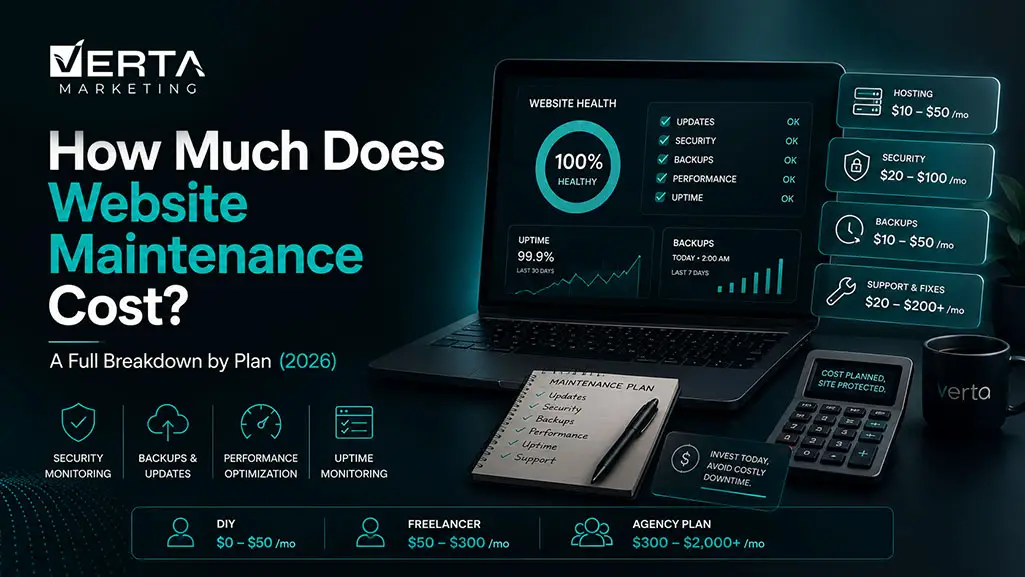
You have to pay for technical maintenance. Applying critical security patches, updating core files, and executing automated backups will cost between $100 and $2,500 a month. Expect to spend 15% to 25% of your initial development cost annually on maintenance alone.
You also have to pay for software licensing. Subscriptions for premium plugins, CRM connectors, and advanced SEO auditing tools add up quickly.
Why Some Website Quotes Are So Cheap
When you issue a proposal request and get a $3,000 quote alongside a $25,000 quote, the lower bid is omitting critical strategic layers. Extremely cheap proposals compress costs by aggressively cutting corners.
- They buy a generic $50 template.
- They bypass user research entirely.
- They ignore digital accessibility standards, exposing you to legal liability.
- They omit professional copywriting, forcing you to write your own content.
- They skip rigorous cross-browser testing, resulting in a buggy user experience.
The resulting asset is a digital liability. It damages your brand credibility instead of acting as a high-performing revenue generator.
How to Budget for the Right Website
Match your budget to your commercial goals. Think purely in terms of return on investment.
If an ecommerce website generates $1,000,000 annually with a 1% conversion rate, investing $50,000 in a strategic redesign to increase that rate to 2% doubles your revenue. That is a highly profitable capital allocation.
Conversely, spending $5,000 on a cheap build that breaks mobile usability and drops your conversion rate to 0.5% is a catastrophic mistake. Do not try to find the cheapest price. Try to find the highest return.
Questions to Ask Before Accepting a Quote
To ensure accurate comparisons between competing proposals, ask providers these specific questions before signing a contract.
- Do you include professional copywriting and content population, or do I have to provide all finalized text?
- Do you build the design entirely from a custom wireframe, or do you modify a pre-existing commercial template?
- What specific level of technical SEO do you implement prior to launch?
- Do you build the website to comply with WCAG 2.2 Level AA accessibility standards?
- Upon final payment, who owns the intellectual property and the administrative rights to the hosting environment?
- What are the required, recurring monthly costs for hosting, software licensing, and technical maintenance post-launch?
Estimating website design cost in Canada means moving past basic page counts. The holistic cost is dictated by technical architecture, regulatory compliance, and the caliber of the engineering talent. A $3,000 website and a $50,000 website are fundamentally different tools engineered for entirely different commercial outcomes.
A Better Way to Buy Web Development
Buying a website through traditional estimates usually means paying for agency bloat or risking your business on a cheap freelancer. The procurement model is broken.
You should buy capacity, not estimates.
At Verta Marketing, we replace unpredictable quotes with a flat-rate monthly subscription. You get elite web design, custom architecture, and professional copywriting for one fixed monthly fee. We do not use commercial templates. We write clean code so your pages load instantly and rank higher on Google.
You submit a brief. We deliver a custom homepage preview in exactly six business days. We deploy full builds faster than an in-house hire, and you never see an hourly invoice. When your development queue is empty, you simply pause the subscription.
Stop guessing what your website will cost. Start building reliable digital infrastructure today.