




Your website is often the first and most lasting impression your business makes. It shapes how customers perceive you, how easily they find you through search, and whether they stay long enough to convert. Getting it right the first time matters, and that starts with choosing a website development company that is genuinely qualified to deliver on your goals, not just one that looks credible on the surface. Let’s look at all the factors Canadian businesses should be evaluating.

The problem is that most agencies present themselves well. Polished websites, confident language, and impressive-looking screenshots are easy to produce. Evaluating whether a company can actually build something that performs, ranks, loads fast, and holds up over time requires a more structured approach.
How the Right Website Development Partner Influences Long-Term Business Growth
A website built on a weak foundation creates problems that compound over time.
- Poor site architecture limits how well search engines can crawl and index your content.
- Slow load times increase bounce rates and lower your quality score in paid search.
- Undocumented code makes future updates expensive and slow.
- Poorly structured CMS setups leave your team unable to make basic changes without hiring a developer every time.
The cost of fixing a bad build is almost always higher than the cost of doing it properly the first time. Rebuilds require new discovery, new design, new development, and new QA, often while your business has already suffered the consequences of a site that underperforms.
The stakes justify a careful evaluation process.
The Website Development Company Checklist
Use this checklist when reviewing any agency, freelancer, or development studio you are considering. Apply the same criteria to every candidate so your comparisons stay fair and consistent.
Do They Understand Your Goals Before Quoting?
A qualified agency will ask about your business, your audience, your current traffic, your conversion goals, and your competitive landscape before proposing anything. If a company sends you a proposal or a price within hours of your first inquiry, they are guessing. Discovery is not optional. It is the foundation on which everything else is scoped.
Ask them directly: What do you need to understand about my business before you can propose a solution?
Do They Have a Relevant Portfolio?
Generic portfolios featuring brochure sites for small local businesses are not evidence that an agency can handle a complex ecommerce build or a content-heavy platform with custom functionality. Relevant portfolio quality means examples that are similar in scope, industry, or technical complexity to your project. Ask for three to five examples most relevant to your needs and evaluate those specifically.
Can They Show You Live Websites, Not Just Screenshots?
Screenshots prove nothing. A site can look beautiful in a mockup and perform terribly in production. Ask for URLs of live websites the agency has built and evaluate them yourself. Check how fast they load using Google PageSpeed Insights or GTmetrix. Test them on mobile. Navigate through them the way a real user would. Live website examples give you real evidence. Screenshots give you marketing material.
Is Their Process Clearly Defined?
A professional agency can walk you through their process in plain language:
- Discovery
- Wireframing
- Design
- Development
- QA
- Staging review
- Launch
- Post-launch support
If the process is vague or they cannot explain how the project moves from phase to phase, that is a signal the execution will be equally unclear. Ask for a written summary of their website development process before you commit.
Do They Clearly Scope Timeline, Deliverables, and Pricing?
The proposal should specify what is included, what is not, what the timeline is for each phase, who owns what deliverables, and what happens if scope changes. Ambiguity at this stage is a predictor of disputes later. A good website development proposal is detailed, not a paragraph with a total number at the bottom.
Do They Account for SEO, Performance, and Mobile Usability?
SEO-friendly website development is not a bonus feature. It is table stakes. Ask whether they implement proper heading hierarchy, schema markup, fast-loading image formats, Core Web Vitals optimization, and mobile-first responsive design by default. If they treat SEO as a separate, optional add-on that someone else handles, that is a sign their builds may be technically sound aesthetically but invisible in search.
Do They Offer Post-Launch Support?
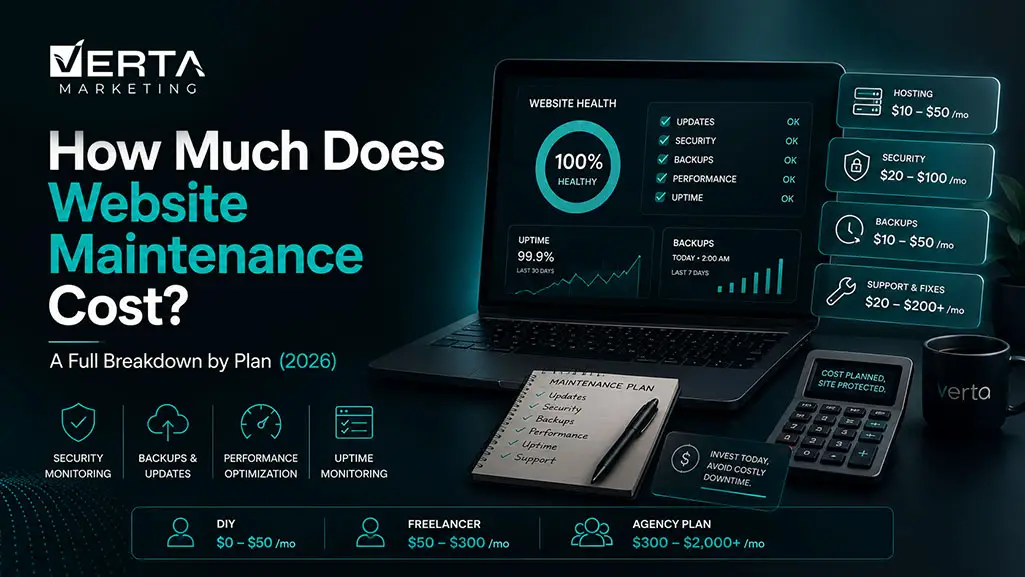
A website is not a finished product at launch. It needs updates, security patches, plugin maintenance, performance monitoring, and ongoing adjustments as your business evolves. Ask what post-launch website support looks like, whether it is included or billed separately, and what the response time is for critical issues. Companies that go quiet after launch create real operational problems.
How Do They Communicate Before the Contract Is Signed?
Pre-sale communication is a preview of the working relationship. If a company is slow to respond, vague in its answers, or inconsistent in who you are dealing with, expect those patterns to continue through the project. Responsiveness, clarity, and professionalism before the contract is a reasonable baseline expectation, not a bonus.
Red Flags to Watch For When Comparing Web Development Companies
This section deserves serious attention. Many of the most common and costly mistakes buyers make come from ignoring early warning signs. These are specific patterns that experienced buyers and agency guides consistently identify as red flags.
- No discovery phase before a proposal: If a company sends a quote, a scope, or a project plan before asking meaningful questions about your business, they are not scoping your project. They are filling in a template. This leads to misaligned expectations, missed requirements, and change orders that inflate the final cost.
- Instant proposals without understanding the project: A variation of the above. Speed is not a sign of expertise here. It is a sign that the company is not taking your project seriously enough to understand it first.
- Vague contracts or unclear scope: If the contract uses language like “website as discussed” or lists deliverables in general terms without specifics, you have no real protection if the project goes sideways. Every line item in the contract should be specific enough that a third party could evaluate whether it was delivered.
- Ultra-lowball pricing: Websites built by qualified professionals with proper process, design, development, QA, and support cost what they cost. A quote that is dramatically lower than comparable agencies is not a deal. It is a signal that corners will be cut somewhere, whether in the quality of work, the experience of the people doing it, or the completeness of what is delivered.
- No live portfolio examples: If an agency cannot or will not share URLs of live websites they have built, that absence should be treated as a significant concern. There are legitimate reasons an agency might not be able to share all work publicly, but they should be able to share something verifiable.
- No mention of QA or testing: Launching a website without a formal quality assurance process means bugs, broken links, rendering issues across browsers, and functionality gaps will make it to your live site. Ask specifically how QA is handled and at what stages.
- Vague answers to technical questions: Ask about page speed optimization, responsive design approach, CMS flexibility, or how they handle browser compatibility. A technically competent team will give you specific, confident answers. Evasive or jargon-heavy non-answers suggest the technical depth is not there.
- No discussion of maintenance or post-launch support: A company that does not raise this topic is either planning to disappear after launch or has not built its service model around long-term client relationships. Either way, you will be left managing the site alone or scrambling to find support later.
Questions to Ask Before You Hire
Beyond the checklist, bring these questions into every conversation with a prospective website development partner in Canada:
- Who will actually work on my project, and what are their roles? You want to know whether you are working with the people you met in the sales process or being handed off to a junior team.
- What does your QA process look like, and when does it happen? A serious answer will describe specific testing phases, not just a general commitment to quality.
- How do you handle scope changes during the project? Scope changes happen. The answer tells you whether the relationship will be collaborative or adversarial when they do.
- What does SEO and performance optimization look like in your builds by default? The answer should cover technical specifics, not a vague commitment to building good websites.
- Can you share references from clients with similar projects? References from businesses comparable to yours in size and industry are more useful than a generic testimonial.
Agency vs. Freelancer vs. DIY Builder: Choosing the Right Model
The right model depends on your project scope, internal capacity, and budget.
A full-service web development company is generally the right choice for businesses building a primary digital presence that needs design, development, SEO foundations, and ongoing support under one roof. The coordination is managed for you, and accountability is clear.
A freelancer can be a good fit for contained projects with clear, simple scope, where you have the internal capacity to manage the relationship and review the work yourself. Quality varies significantly, and you carry more project management responsibility.
A DIY website builder like Squarespace or Shopify works for businesses with extremely limited budgets and low complexity requirements, but it comes with real ceiling limitations on performance, customization, and SEO control as your business grows.
For most Canadian SMBs building a serious web presence, a qualified agency with a defined process and post-launch support is the option with the lowest long-term risk.
Canadian Considerations Worth Evaluating
For businesses in Canada, a few additional factors belong in your evaluation.
- Accessibility and AODA compliance: The Accessibility for Ontarians with Disabilities Act (AODA) sets standards for web accessibility that apply to many Ontario-based organizations, with similar frameworks emerging across other provinces. Ask whether the agency builds to WCAG 2.1 standards by default and whether they are familiar with Canadian accessibility obligations. This is not a niche concern. It is a legal and ethical baseline.
- Familiarity with Canadian business context. An agency that works regularly with Canadian clients will understand bilingual content considerations, regional market differences, Canadian payment and privacy expectations, and the regulatory environment your business operates in. This context shapes decisions across design, content structure, and functionality.
- Working relationship expectations: Time zone alignment, communication norms, and project management expectations differ across markets. A website development company in Canada that operates in your time zone and understands how Canadian businesses work reduces friction throughout the project.
How to Compare Multiple Agencies Fairly
Once you have a shortlist of three to five candidates, apply the checklist above to each one using the same criteria. Do not let price be the first filter. Evaluate portfolio quality, process clarity, communication quality, and scope specificity first, then compare price ranges of the web devs in the context of what each company is actually offering.
Ask for proposals that use consistent scope definitions so you are comparing equivalent deliverables. A proposal for a ten-page website with SEO setup, QA, and three months of post-launch support is not comparable to a proposal for a ten-page website with none of those components, even if the design looks similar.
Use a simple scoring sheet if it helps. Rate each agency on each checklist item, then review the scores alongside the pricing. That combination gives you a clearer picture than any single factor alone.
Choose Verta Marketing Inc. as the Best Canadian Web Dev Partner
Picking the wrong website development company in Canada means budget overruns, poor performance, weak SEO, and an unmaintainable site. The right one delivers expert processes, communication, and long-term support for real growth.
Use this checklist before you hire a website development company.
Verta Marketing Inc. stands out by specializing in Canadian businesses. We blend cutting-edge web development with tailored digital marketing, creating high-performance, SEO-optimized sites that drive traffic and conversions, while mastering Canada’s regulations, culture, and markets.
Our collaborative process covers custom e-commerce, responsive designs, post-launch maintenance, and growth strategies that boost ROI, making us your partner for scalable success.
To build a website that fuels your growth contact Verta Marketing Inc. today. Let’s turn your vision into a high-converting reality! Book a demo.